
Individuals who are at ongoing risk for getting HIV through sex or injection drug use can reduce their risk of contracting HIV by taking a prescription called Truvada once a day, every day. Taking PrEP has been shown to reduce the risk of becoming HIV positive by up to 92%.
PrEP is most effective at reducing the risk of HIV infection when used in conjunction with condoms. And unlike condoms, taking PrEP by itself does not protect against other STDs like gonorrhea, chlamydia, and syphilis. Be sure to talk to your medical provider about all safer sex practices.
If you have questions about PrEP, please call 317.880.8300.
PrEP Overview
Pre-exposure prophylaxis, or PrEP, is a tool that can be used to help people who are HIV negative stay that way by reducing their risk of contracting the virus. Individuals who are at ongoing risk for getting HIV through sex or injection drug use take a prescription called Truvada once a day, every day. Taking PrEP has been shown to reduce the risk of becoming HIV positive by up to 92%.
PrEP is most effective at reducing the risk of HIV infection when used in conjunction with condoms. And unlike condoms, taking PrEP by itself does not protect against other STDs like gonorrhea, chlamydia, and syphilis. Be sure to talk to your medical provider about all safer sex practices.
PrEP can stop HIV infection before it starts. The medicine taken for PrEP is usually prescribed to treat HIV. Since this medicine prevents HIV from reproducing in the body, it can be used to prevent HIV infection in people exposed to the virus from sex or injection drug use. It is even more effective when combined with consistent condom use.
PrEP is recommended for anyone who:
- Has more than one sexual partner
- Does not always use condoms
- Is in a relationship with an HIV-positive partner
- Is unsure of their sexual partner's HIV status
- Has had an STD in the last six months
- Wants to have a baby with an HIV-positive partner
- Uses injection drugs
Being on PrEP is more than just taking a pill each day. PrEP is part of an HIV prevention program, and it requires ongoing visits with a medical provider.
At your first PrEP appointment, you will meet with a provider who will review your medical history. If PrEP is right for you, the provider will test you for HIV, other sexually transmitted infections, pregnancy (if applicable), hepatitis B and kidney function. You will leave the appointment with a prescription for Truvada, and we will contact you with your lab results the next business day. Once the provider confirms the lab results with you, you can begin taking the medication. For as long as you choose to remain on PrEP, you will need to see your medical provider every three months. At these appointments, you will receive follow-up testing and prescription refills.
PrEP services are offered primarily on the Eskenazi Health downtown campus on Tuesday afternoons. If you are unavailable on Tuesday afternoons, PrEP services are also offered via appointment at:
- Eskenazi Health Center Grande
- Eskenazi Health Center Grassy Creek
- Eskenazi Health Center Pecar
- Eskenazi Health Center West 38th Street
- Eskenazi Health Center Westside
Most people who take Truvada for PrEP do not have serious side effects; however, one in 10 people may experience mild side effects including headaches, nausea, diarrhea and stomachaches that go away after the first few weeks. Rarely, Truvada can change your kidney function, so your provider will check your kidney function regularly. Your provider can help if side effects are bothering you.
Patients without medical insurance should meet with an Eskenazi Health financial counselor to apply for insurance before scheduling a PrEP appointment. Please call 855.202.1053 to set up a meeting with a financial counselor.
Patients with medical insurance should first verify that Eskenazi Health is in-network for their insurance plan. Please call the member services phone number listed on the back of your insurance card to learn more about what insurance will cover. Helpful questions to ask your insurance company to help estimate out-of-pocket costs include:
- What is my deductible for medical care and medications?
- How much of my deductible (if any) have I met to date?
- What is my copayment for a specialist visit?
- Is Eskenazi Health an in-network provider?
- Do I need a referral from a primary care physician or a prior authorization?
- Will I have to pay any out-of-pocket costs for lab work?
- Is the Eskenazi Health lab an in-network facility?
You may also qualify for a copay assistance card to help with prescription costs. We will give you more information about this resource when you decide to move forward with starting PrEP.
Uninsured patients must make a down payment at registration on the date of the first visit. This amount is determined by Eskenazi Health Patient Financial Services.
-
 Eskenazi Health Center Blackburn
2700 Dr. Martin Luther King (MLK) Jr. St.
Indianapolis
317.931.4300
-
 Eskenazi Health Center Grande
6002 E. 38th St.
Indianapolis
317.880.6002
-
 Eskenazi Health Center Grassy Creek
9443 E. 38th St.
Indianapolis
317.890.2100
-
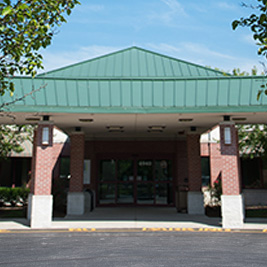 Eskenazi Health Center Pecar
6940 Michigan Rd.
Indianapolis
317.266.2901
-
 Eskenazi Health Center West 38th Street
5515 W. 38th St.
Indianapolis
317.880.3838
-
 Eskenazi Health Center Westside
2732 W. Michigan St.
Indianapolis
317.554.4600
-
 Eskenazi Health Thomas & Arlene Grande Campus
6002 E. 38th St.
Indianapolis
317.880.0000
-
 Sandra Eskenazi Outpatient Care Center
720 Eskenazi Ave.
Indianapolis
317.880.0000
-
Sidney & Lois Eskenazi Hospital
Sidney & Lois Eskenazi Hospital
720 Eskenazi Ave.
Indianapolis
317.880.0000
For more information, please contact Eskenazi Health Infectious Disease Clinic at 317.880.8300.