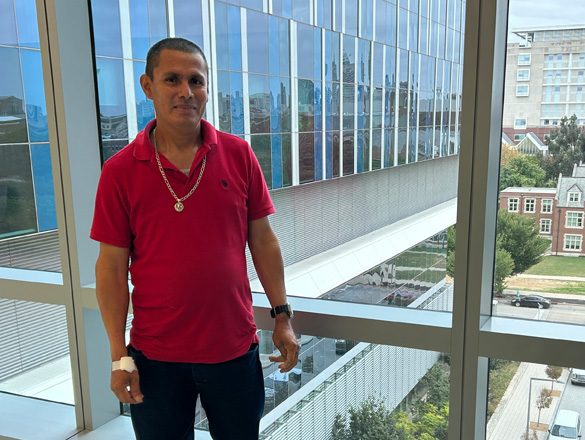
Victor Manuel Bustamante Alfaro had noticed something unusual on his right breast: a small swelling. To him, it looked like a pimple with a rash on it. It was causing him some pain.
Before long, the 48-year-old started observing lumpiness in his breast region as well. Most worrisome, he felt something else: the pain had increased, and medication didn’t diminish it.
Still, Alfaro avoided going to the doctor. Only when the pain became excruciating did he finally seek treatment at the Michael & Susan Smith Emergency Department at Sidney & Lois Eskenazi Hospital.
There he discovered he had breast cancer. While much rarer for men than for women, the American Cancer Society estimates about 2,670 men will be diagnosed with invasive breast cancer by the end of 2026.
Alfaro says he was scared, having heard that those with cancer didn’t live long. He also didn’t have family nearby. All of his relatives were in Nicaragua.
But negativity wasn’t Alfaro’s way. After deciding to put himself in God’s hands, he quickly discovered he would receive a lot of support. He says everyone at Eskenazi Health — doctors, nurses and other members of the medical staff — treated him well. The attentiveness of breast surgeon Lisa R. Korff, M.D., particularly struck Alfaro.
He appreciates ongoing assistance from the Eskenazi Health EMBRACE team, which provides individualized support for cancer patients. He says Thania Salazar, a breast health navigator with EMBRACE, connected him with food, financial and transportation assistance. A few months ago, when his Medicaid coverage lapsed and he stopped seeking treatment as a result, she helped him get re-enrolled.
His community members have been supportive as well. A fellow Nicaraguan from work was the one who took him to the emergency department. That same new friend also assisted with his rent and other expenses, he says. The employer the two men shared displayed generosity as well, Alfaro says. He would give Alfaro less strenuous tasks during recoveries so that he could remain at work.
Alfaro soon learned that the cancer had spread to his bones. Treatments have included two surgeries, radiation therapy, chemotherapy and medication. On a recent visit, he was pleased to learn that his cancer hadn’t progressed. Alfaro describes himself as feeling strong, not tired and able to eat anything. While he says he’s always managed to avoid drugs, alcohol and other bad habits, he’s now tackling his own weakness: Coca-Cola. He’s reduced his intake to occasional Cokes rather than his usual six or seven small cans a day.
Although Alfaro feels strong in his body and mind and positive about his health outlook, he still wants others to learn from his example. Just a few weeks ago, he warned a friend who mentioned a lump to get it checked out. He says many people will let things go because of the costs of health care. But had he sought medical assistance when he first noticed the supposed pimple, he believes he might not have needed a second surgery. He fears other men won’t get help, so he keeps telling friends not to wait, to go to the doctor as soon as their bodies tell them something is wrong.
It’s not worth it, he says, to die because you’re scared you don’t have the money for treatment.